Hand & Wrist Surgeons in Austin & Central Texas

Anatomy
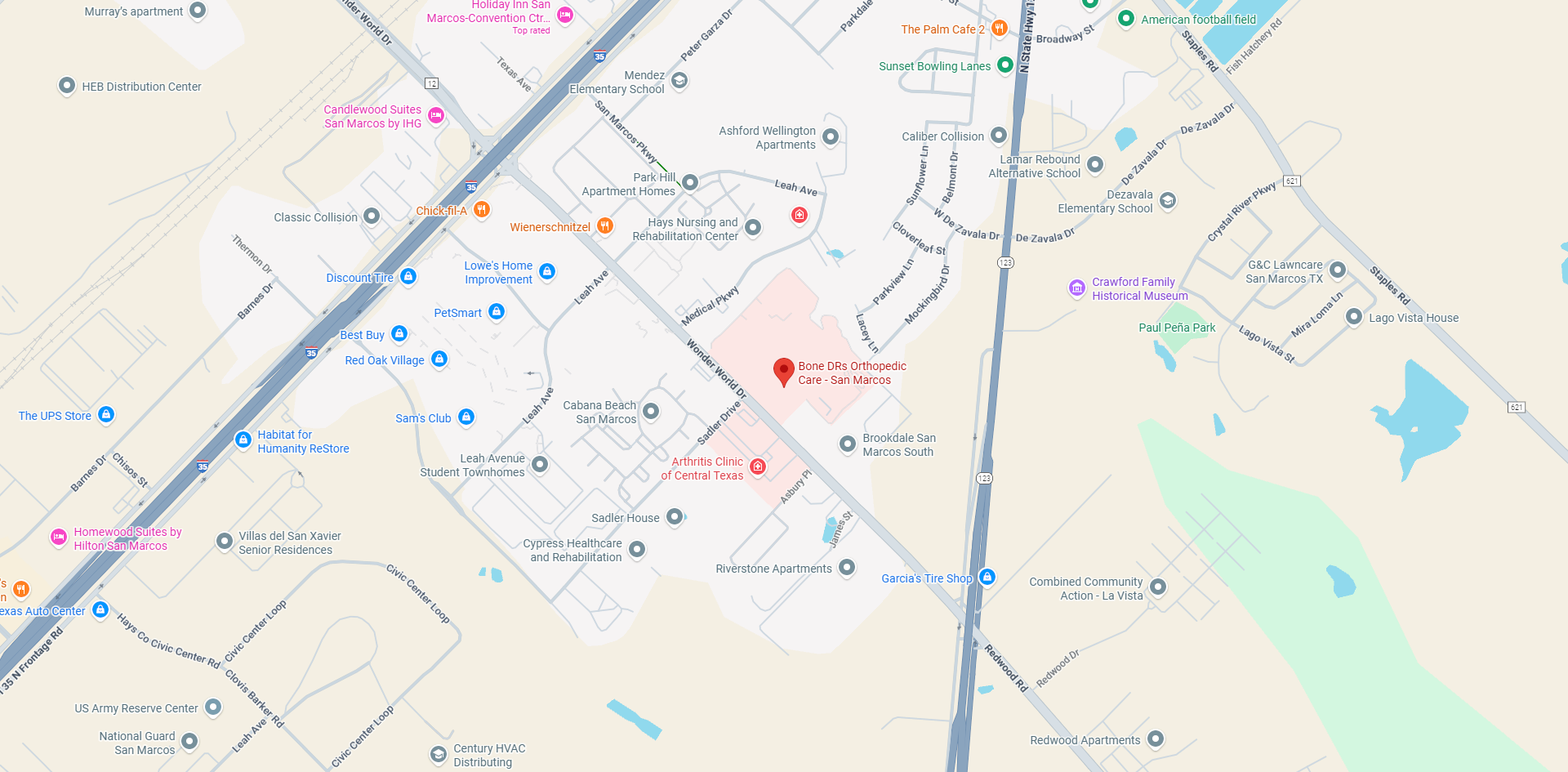
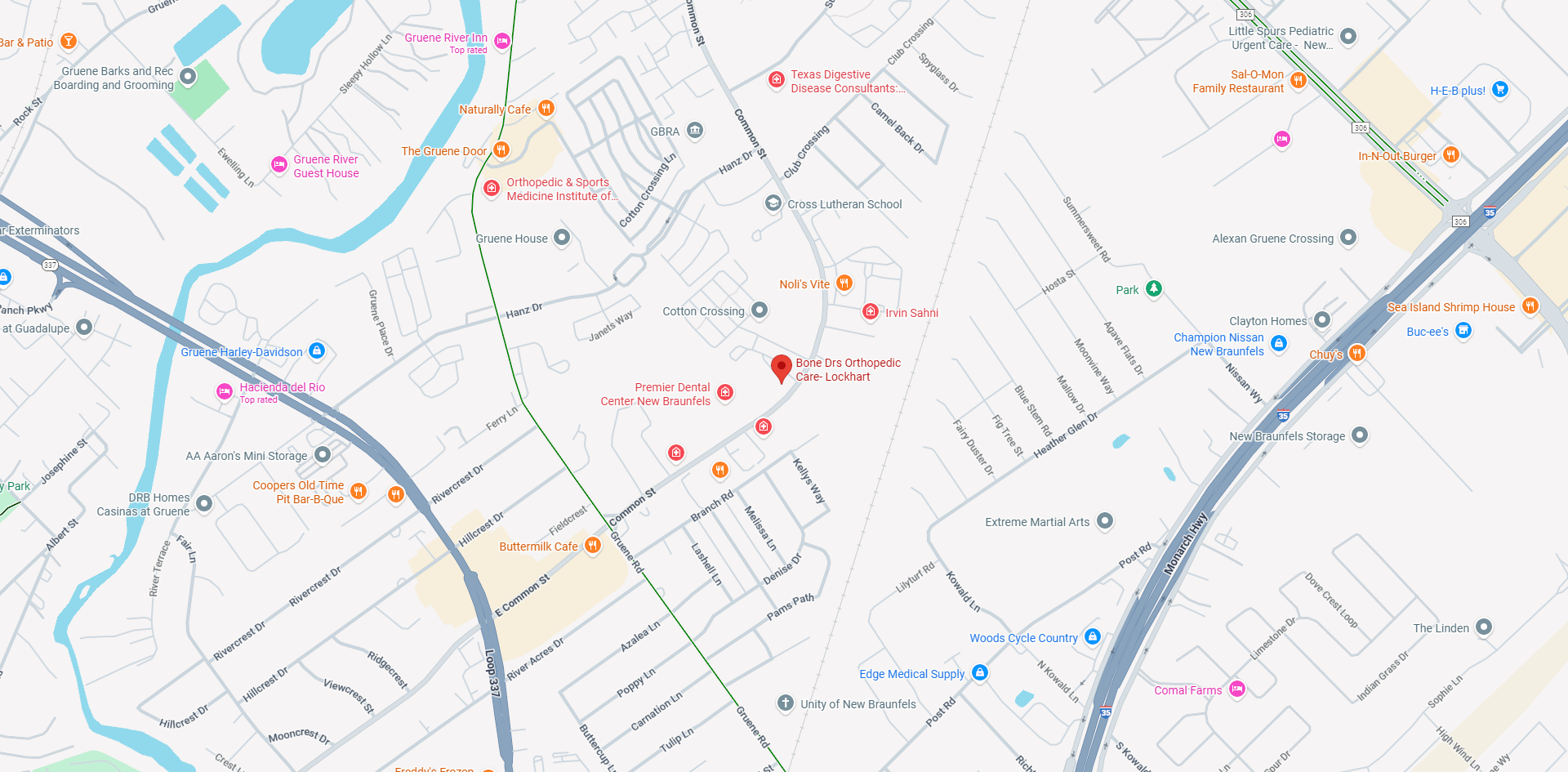
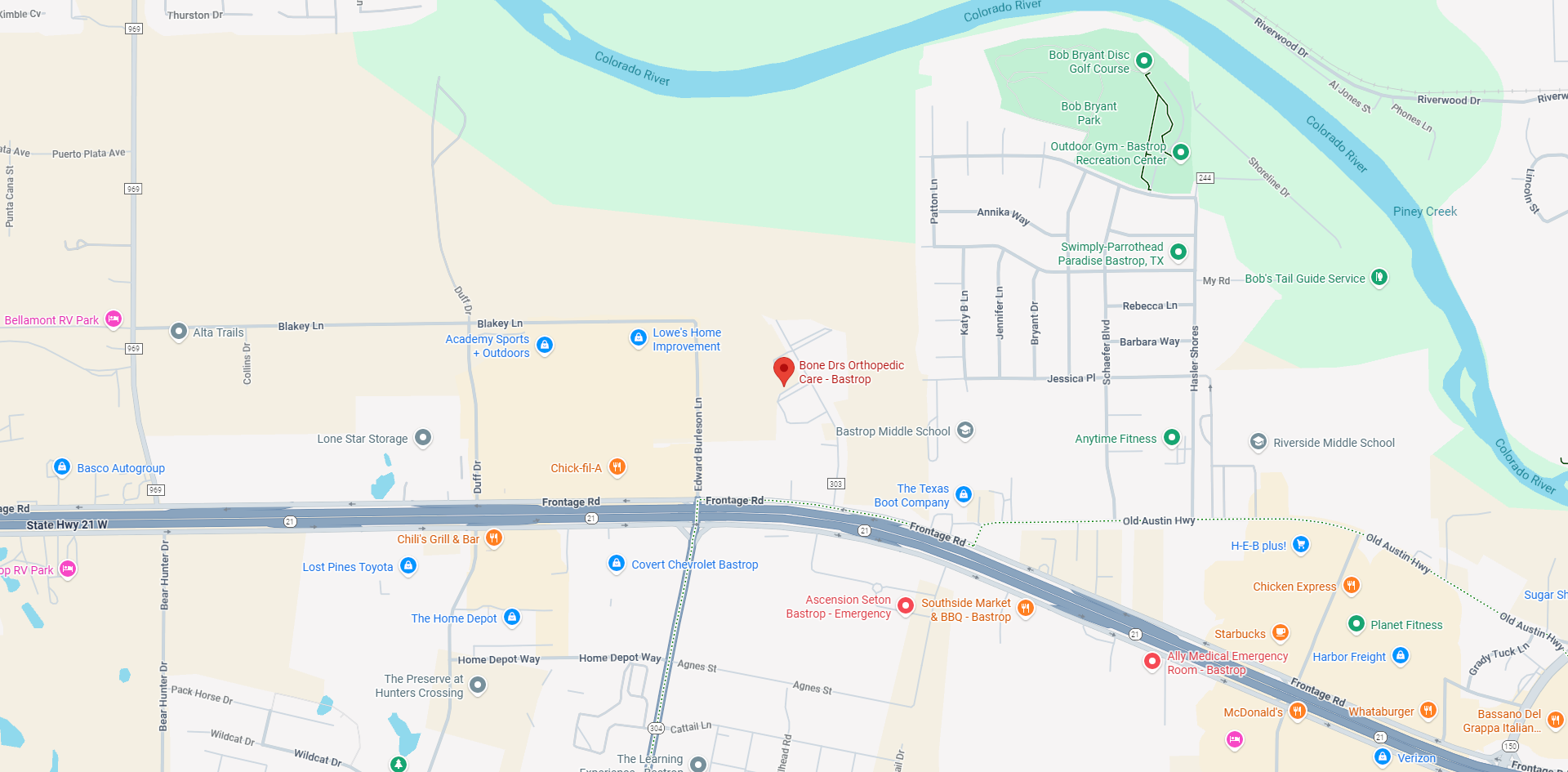
BONE DRs offers specialized hand and wrist care in Austin, San Marcos, Bastrop, and Round Rock, TX. Our fellowship-trained hand and upper extremity surgeons treat carpal tunnel, trigger finger, wrist fractures, thumb arthritis, and other conditions with both nonsurgical and surgical approaches.
Hand Anatomy
The human hand is made up of the wrist, palm, and fingers and consists of 27 bones, 27 joints, 34 muscles, over 100 ligaments and tendons, and many blood vessels and nerves.
The hands enable us to perform many of our daily activities such as driving, writing and cooking. It is important to understand the normal anatomy of the hand to learn more about diseases and conditions that can affect our hands.
Bones of the Hand
The wrist is comprised of 8 carpal bones. These wrist bones are attached to the radius and ulna of the forearm to form the wrist joint. They connect to 5 metacarpal bones that form the palm of the hand. Each metacarpal bone connects to one finger at a joint called the metacarpophalangeal joint (MCP joint). This joint is commonly referred to as the knuckle joint.
The bones in our fingers and thumb are called phalanges. Each finger has 3 phalanges separated by two interphalangeal joints, except for the thumb, which has only 2 phalanges and one interphalangeal joint.
The first joint close to the knuckle joint is called the proximal interphalangeal joint (PIP joint). The joint closest to the end of the finger is called the distal interphalangeal joint (DIP joint).
The MCP and PIP joint act like hinges when the fingers bend and straighten.
Soft Tissues of the Hand
Our hand bones are held in place and supported by various soft tissues. These include: articular cartilage, ligaments, muscles and tendons.
Articular cartilages are smooth material that act as shock absorbers and cushion the ends of bones at each of the 27 joints, allowing smooth movement of the hand.
Muscles and ligaments function to control the movement of the hand.
Ligaments are tough rope-like tissues that connect bones to other bones, holding them in place and providing stability to the joints. Each finger joint has two collateral ligaments on either side, which prevents the abnormal sideways bending of the joints. The volar plate is the strongest ligament in the hand. It joins the proximal and middle phalanx on the palm side of the joint and prevents backward bending of the PIP joint (hyperextension).
Muscles of the Hand
Muscles are fibrous tissues that help produce movement. They work by contracting.
There are two types of muscles in the hand:
- Intrinsic muscles are small muscles that originate in the wrist and hand. They are responsible for fine motor movements of the fingers during activities such as writing or playing the piano.
- Extrinsic muscles that originate in the forearm or elbow control the movement of the wrist and hand. These muscles are responsible for gross hand movements. They position the wrist and hand while the fingers perform fine motor movements.
Each finger has six muscles controlling its movement: three extrinsic and three intrinsic muscles. The index and little finger each have an extra extrinsic extensor.
Tendons of the Hand
Tendons are soft tissues that connect muscles to bones. When muscles contract, tendons pull the bones, causing the finger to move. The extrinsic muscles are attached to finger bones through long tendons that extend from the forearm through the wrist. Tendons located on the palm side help in bending the fingers and are called flexor tendons, while tendons on top of the hand called extensor tendons help in straightening the fingers.
Nerves of the Hand
Nerves of the hand carry electrical signals from the brain to the muscles in the forearm and hand, enabling movement. They also carry the senses of touch, pain and temperature back from the hands to the brain.
The three main nerves of the hand and wrist include:
- Ulnar nerve: The ulnar nerve crosses the wrist through an area called Guyon’s canal and branches to provide sensation to the little finger and half of the ring finger.
- Median nerve: The median nerve crosses the wrist through a tunnel called the carpal tunnel. The median nerve provides sensation to the palm, thumb, index finger, middle finger and part of the ring finger.
- Radial nerve: The radial nerve runs down the thumb side of the forearm and provides sensation to the back of the hand from the thumb to the middle finger.
All three nerves originate at the shoulder and travel down the arm to the hand. Each of these nerves has sensory and motor components.
Blood Vessels of the Hand
Blood vessels travel beside the nerves to supply blood to the hand. The main arteries are the ulnar and radial arteries, which supply blood to the front of the hand, fingers, and thumb. The ulnar artery travels next to the ulnar nerve through the Guyon’s canal in the wrist. The radial artery is the largest artery of the hand, traveling across the front of the wrist, near the thumb. Pulse is measured at the radial artery.
Other blood vessels travel across the back of the wrist to supply blood to the back of the hand, fingers and thumb.
Bursae of the Hand
Bursae are small fluid-filled sacs that decrease friction between tendons and bone or skin. They contain special cells called synovial cells that secrete a lubricating fluid.
Conditions
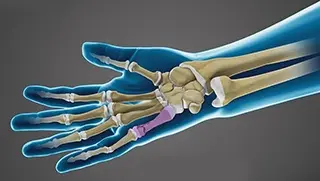
Fractures of the Hand and Fingers

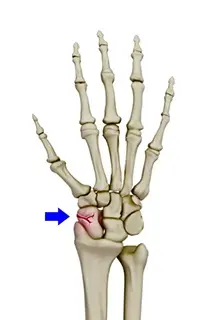
Scaphoid Fracture
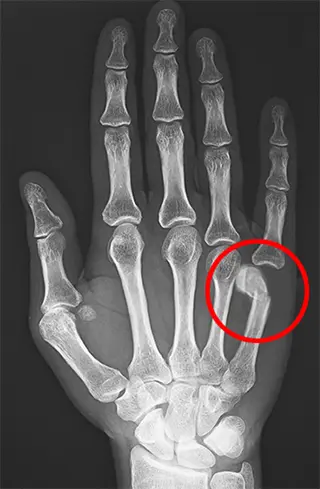
Boxer’s Fracture
Carpal Tunnel Syndrome
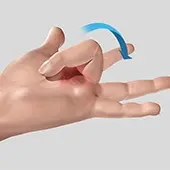
Trigger Finger
Wrist Pain
Dupuytren’s Contracture
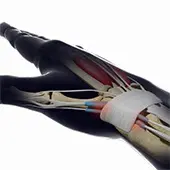
De Quervain’s Tendinosis
Extensor Tendon Injuries
Boutonniere Deformity
Gamekeeper’s Thumb
Procedures
Artificial Finger Joint Replacement
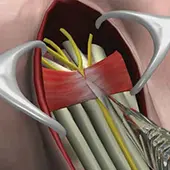
Carpal Tunnel Release Surgery
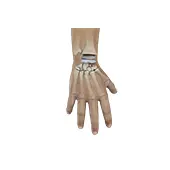
Wrist Joint Replacement
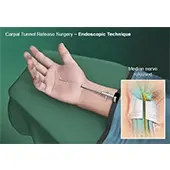
Endoscopic Carpal Tunnel Surgery
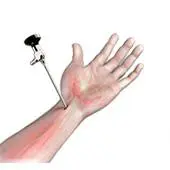
Wrist Arthroscopy
Wrist Ligament Reconstruction
Wrist Fracture Surgery
FAQs
We treat carpal tunnel syndrome, trigger finger, arthritis, fractures, tendon injuries, and other hand conditions. Our fellowship-trained hand specialist has advanced expertise in complex hand procedures and reconstruction.
Many people find relief from carpal tunnel symptoms with nonsurgical treatments like splinting, activity modification, and corticosteroid injections. If symptoms aren’t improving after 4–6 weeks of conservative care, surgery becomes a good option for long-term relief.
This depends on your specific condition, but typically you might wear a splint for 3–6 weeks for injuries or during the initial treatment phase. Your hand specialist will tell you exactly how long based on what’s wrong and how well you’re healing.
Many patients can work with modifications depending on their job and injury type. We can help you figure out what activities are safe and what you should avoid, and we work with employers on temporary restrictions if needed while your hand heals.
Recovery depends on the specific procedure — your hand specialist will give you a personalized timeline and specific activity restrictions. We’ll progress you safely through hand therapy to get full function back.
Arthritis pain can often be managed with activity modification, anti-inflammatory medications, and injections, especially in early stages. If conservative treatments aren’t working well, your specialist can discuss surgical options that might provide more lasting relief.
BONE DRs offers specialized hand and wrist care in Austin, San Marcos, Bastrop, and Round Rock, TX. Our fellowship-trained hand and upper extremity surgeons treat carpal tunnel, trigger finger, wrist fractures, thumb arthritis, and other conditions with both nonsurgical and surgical approaches.
Hand Anatomy
The human hand is made up of the wrist, palm, and fingers and consists of 27 bones, 27 joints, 34 muscles, over 100 ligaments and tendons, and many blood vessels and nerves.
The hands enable us to perform many of our daily activities such as driving, writing and cooking. It is important to understand the normal anatomy of the hand to learn more about diseases and conditions that can affect our hands.
Bones of the Hand
The wrist is comprised of 8 carpal bones. These wrist bones are attached to the radius and ulna of the forearm to form the wrist joint. They connect to 5 metacarpal bones that form the palm of the hand. Each metacarpal bone connects to one finger at a joint called the metacarpophalangeal joint (MCP joint). This joint is commonly referred to as the knuckle joint.
The bones in our fingers and thumb are called phalanges. Each finger has 3 phalanges separated by two interphalangeal joints, except for the thumb, which has only 2 phalanges and one interphalangeal joint.
The first joint close to the knuckle joint is called the proximal interphalangeal joint (PIP joint). The joint closest to the end of the finger is called the distal interphalangeal joint (DIP joint).
The MCP and PIP joint act like hinges when the fingers bend and straighten.
Soft Tissues of the Hand
Our hand bones are held in place and supported by various soft tissues. These include: articular cartilage, ligaments, muscles and tendons.
Articular cartilages are smooth material that act as shock absorbers and cushion the ends of bones at each of the 27 joints, allowing smooth movement of the hand.
Muscles and ligaments function to control the movement of the hand.
Ligaments are tough rope-like tissues that connect bones to other bones, holding them in place and providing stability to the joints. Each finger joint has two collateral ligaments on either side, which prevents the abnormal sideways bending of the joints. The volar plate is the strongest ligament in the hand. It joins the proximal and middle phalanx on the palm side of the joint and prevents backward bending of the PIP joint (hyperextension).
Muscles of the Hand
Muscles are fibrous tissues that help produce movement. They work by contracting.
There are two types of muscles in the hand:
- Intrinsic muscles are small muscles that originate in the wrist and hand. They are responsible for fine motor movements of the fingers during activities such as writing or playing the piano.
- Extrinsic muscles that originate in the forearm or elbow control the movement of the wrist and hand. These muscles are responsible for gross hand movements. They position the wrist and hand while the fingers perform fine motor movements.
Each finger has six muscles controlling its movement: three extrinsic and three intrinsic muscles. The index and little finger each have an extra extrinsic extensor.
Tendons of the Hand
Tendons are soft tissues that connect muscles to bones. When muscles contract, tendons pull the bones, causing the finger to move. The extrinsic muscles are attached to finger bones through long tendons that extend from the forearm through the wrist. Tendons located on the palm side help in bending the fingers and are called flexor tendons, while tendons on top of the hand called extensor tendons help in straightening the fingers.
Nerves of the Hand
Nerves of the hand carry electrical signals from the brain to the muscles in the forearm and hand, enabling movement. They also carry the senses of touch, pain and temperature back from the hands to the brain.
The three main nerves of the hand and wrist include:
- Ulnar nerve: The ulnar nerve crosses the wrist through an area called Guyon’s canal and branches to provide sensation to the little finger and half of the ring finger.
- Median nerve: The median nerve crosses the wrist through a tunnel called the carpal tunnel. The median nerve provides sensation to the palm, thumb, index finger, middle finger and part of the ring finger.
- Radial nerve: The radial nerve runs down the thumb side of the forearm and provides sensation to the back of the hand from the thumb to the middle finger.
All three nerves originate at the shoulder and travel down the arm to the hand. Each of these nerves has sensory and motor components.
Blood Vessels of the Hand
Blood vessels travel beside the nerves to supply blood to the hand. The main arteries are the ulnar and radial arteries, which supply blood to the front of the hand, fingers, and thumb. The ulnar artery travels next to the ulnar nerve through the Guyon’s canal in the wrist. The radial artery is the largest artery of the hand, traveling across the front of the wrist, near the thumb. Pulse is measured at the radial artery.
Other blood vessels travel across the back of the wrist to supply blood to the back of the hand, fingers and thumb.
Bursae of the Hand
Bursae are small fluid-filled sacs that decrease friction between tendons and bone or skin. They contain special cells called synovial cells that secrete a lubricating fluid.
Artificial Finger Joint Replacement
Carpal Tunnel Release Surgery
Wrist Joint Replacement
Endoscopic Carpal Tunnel Surgery
Wrist Arthroscopy
Wrist Ligament Reconstruction
Wrist Fracture Surgery
FAQs
We treat carpal tunnel syndrome, trigger finger, arthritis, fractures, tendon injuries, and other hand conditions. Our fellowship-trained hand specialist has advanced expertise in complex hand procedures and reconstruction.
Many people find relief from carpal tunnel symptoms with nonsurgical treatments like splinting, activity modification, and corticosteroid injections. If symptoms aren’t improving after 4–6 weeks of conservative care, surgery becomes a good option for long-term relief.
This depends on your specific condition, but typically you might wear a splint for 3–6 weeks for injuries or during the initial treatment phase. Your hand specialist will tell you exactly how long based on what’s wrong and how well you’re healing.
Many patients can work with modifications depending on their job and injury type. We can help you figure out what activities are safe and what you should avoid, and we work with employers on temporary restrictions if needed while your hand heals.
Recovery depends on the specific procedure — your hand specialist will give you a personalized timeline and specific activity restrictions. We’ll progress you safely through hand therapy to get full function back.
Arthritis pain can often be managed with activity modification, anti-inflammatory medications, and injections, especially in early stages. If conservative treatments aren’t working well, your specialist can discuss surgical options that might provide more lasting relief.


Schedule An Appointment