
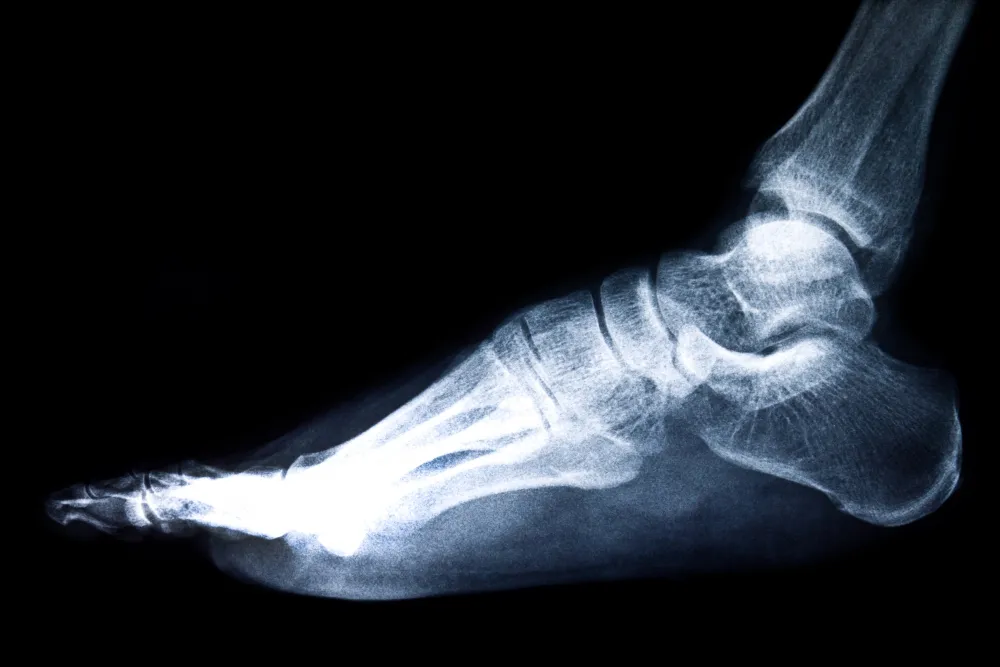
A nagging ache in your foot that shows up when you run or walk and fades when you rest is easy to shrug off. But that pattern is a classic sign of a stress fracture, a tiny crack in a bone that gets worse if you keep pushing through it. If you have picked up your training, changed your shoes, or spent a long day on your feet and now have foot pain that will not quit, here is what to know and when to get it checked.
What a stress fracture is
A stress fracture is a small crack in a bone, or severe bruising within the bone, caused by repeated force rather than a single injury. Your bones are constantly rebuilding themselves. When you do more activity than they can keep up with, the breakdown of old bone starts to outpace the repair, the bone weakens, and a small crack can form. The weight-bearing bones of the foot are especially vulnerable because they absorb so much force every time you walk, run, or jump. In the foot, stress fractures most often occur in the metatarsals, the long bones that connect your midfoot to your toes, and in the heel bone.
Signs and symptoms
Stress fractures rarely announce themselves the way a sudden break does. The pain builds gradually and follows a telltale pattern. Watch for:
- Pain that develops slowly and gets worse during weight-bearing activity
- Pain that eases when you rest and flares again when you return to activity
- Pinpoint tenderness when you press directly on one spot on the bone
- Swelling on the top of the foot or the outside of the ankle
- Possible bruising over the sore area
One of the most useful clues is how focused the pain is. A stress fracture usually hurts right over the injured bone, not across the whole foot. If pressing on one specific spot reproduces your pain, that is worth taking seriously.
What causes a foot stress fracture
The most common cause is doing too much, too soon. Some of the usual triggers include:
- A sudden increase in how often, how far, or how hard you train
- Starting a new activity or returning to one after time off
- Switching surfaces, like moving from a treadmill to pavement or from grass to a hard court
- Worn-out or unsupportive shoes that no longer absorb shock
- A change in your foot mechanics from a blister, bunion, or other issue that shifts weight onto certain bones
Bone strength matters too. Conditions such as osteoporosis or low vitamin D can make a stress fracture more likely even with everyday activity, which is one reason these injuries are more common in the winter months. Female athletes are also more prone to stress fractures, in part due to lower bone density in some cases. A long day of walking on vacation, when you normally do not walk much, can be enough to cause one.
When to see a doctor
See a specialist promptly if you suspect a stress fracture. Ignoring the pain can allow the small crack to become a complete break, which takes longer to heal and sometimes requires surgery. It is time to get checked if:
- Foot pain has lasted more than a few days and worsens with activity
- You can pinpoint tenderness over one spot on the bone
- There is swelling or bruising on the top of the foot or the outside of the ankle
- The pain returns every time you go back to your activity
If you need to be seen quickly, our orthopedic urgent care in Austin can evaluate the injury without the wait of an emergency room. In the meantime, follow the RICE approach: rest, ice the area for about 20 minutes at a time with a barrier between the pack and your skin, use light compression, and elevate the foot above heart level.
Treatment options at BoneDrs
The right treatment depends on which bone is involved and how severe the crack is. Dr. Angirasa, our foot and ankle specialist, will examine the foot for pinpoint tenderness and order imaging to confirm the diagnosis. A stress fracture often does not show up on an early X-ray because the crack is so small, so an MRI or bone scan may be used, since both can detect these injuries earlier.
Most foot stress fractures heal without surgery. Non-surgical care usually includes:
- Rest from the activity that caused the injury, often with crutches to keep weight off the foot until the pain settles
- Protective footwear such as a stiff-soled shoe or a walking boot
- A cast in certain cases that need extra stability
- Low-impact cross-training, like swimming or cycling, only once your doctor approves it
Some stress fractures do need surgery to heal properly, particularly those in bones with a poor blood supply, such as the base of the fifth metatarsal on the outside of the foot, or fractures that have shifted out of place. In those cases, a surgeon may use small pins, screws, or plates to hold the bone steady while it heals. If your pain is centered on the outer edge of the foot, our related guide on the non-displaced Jones fracture covers that specific injury in more depth.
Recovery and getting back to activity
Most stress fractures take about six to eight weeks to heal, though more serious ones, or those in bones with less blood supply, can take longer. The hardest part for active people is often the waiting, but returning too soon is the most common way to end up sidelined even longer or to turn a small crack into a full break. Once your pain has improved and imaging confirms healing, your doctor will guide a gradual return, often alternating activity days with rest days at first and slowly building back your distance and intensity.
How to lower your risk of another one
A few habits go a long way toward keeping stress fractures from coming back:
- Increase training gradually, generally no more than about 10 percent per week
- Replace running shoes before they wear out and lose their cushioning
- Cross-train so you are not loading the same bones every day
- Eat a diet with enough calcium and vitamin D to support bone strength
- Stop and rest if pain or swelling returns, and see a doctor if it persists
For more on choosing supportive footwear, the AAOS has a helpful overview of athletic shoes.
Frequently asked questions
Can you walk on a foot stress fracture?
You often can still walk, which is part of why these injuries get ignored. But continuing to put weight on the bone can make the crack worse and delay healing. It is best to rest and get it evaluated rather than push through the pain.
How long does a foot stress fracture take to heal?
Most heal in about six to eight weeks with rest and protection, though more serious fractures or those in bones with a poor blood supply can take longer. Returning to activity too early is the most common cause of a setback.
Will a stress fracture show up on an X-ray?
Not always at first. Because the crack is so small, it may not appear on an early X-ray and sometimes only becomes visible weeks later as the bone heals. When the X-ray is unclear, an MRI or bone scan can detect the fracture sooner.
Schedule a consultation at BoneDrs
If foot pain keeps returning every time you get active, do not wait for it to turn into a bigger problem. Dr. Angirasa and the team at BoneDrs Orthopedic Care see patients across Austin, San Marcos, Bastrop, and Round Rock, and can get you an accurate diagnosis and a plan to heal fully and get back on your feet. Call 512-266-3377 to schedule your visit.
If you have any concerns about your joints, contact us and we can help determine a treatment that works for you.