
A rotator cuff repair reattaches a torn shoulder tendon to the top of your arm bone, using stitches held by small anchors set into the bone itself. It is one of the most common orthopedic operations in the country, and for the right patient it ends years of pain and weakness.
Here is what most people are not told at the first appointment. A rotator cuff repair can be done well and still fail to fully heal. Depending on the size of the tear and the condition of the muscle behind it, somewhere between 9 and 57 percent of repairs develop a new gap in the tendon over the following year. And here is the part that surprises people most: many of them still get improvement in their shoulder symptoms. Pain relief and function improve after repair in a large share of patients whose tendon never completely knits.
That gap between "healed" and "better" is why this is more complicated than torn versus not torn. This guide covers who actually benefits from surgery, what the operation involves, and what the months afterward genuinely look like, including the part nobody warns you about, which is sleep.
Quick facts about rotator cuff repair
- What it is: A torn tendon is stitched back onto the arm bone, usually through several small incisions
- Sleeping upright: Most people sleep in a recliner or propped up for the first 4 to 6 weeks
- Sling: Usually 4 to 6 weeks, including overnight, and longer for large tears
- Driving: Usually somewhere between 6 and 10 weeks, once the sling is off
- Back to work: Around 1 to 2 weeks for a desk job, several months for heavy lifting or overhead work
- Full recovery: 4 to 6 months for comfortable daily life, and 9 to 12 months for full strength
J. Michael Bennett, MD: As a board-certified orthopedic surgeon specializing in orthopedic sports medicine, I repair rotator cuffs for patients across Central Texas, from weekend tennis players to electricians who work overhead every day. The most useful conversation I have in clinic is not about whether the tendon is torn. It is about what the muscle behind the tendon looks like, what you need your shoulder to do, and whether an operation is likely to change either one.
Understanding the rotator cuff, and why repair is harder than it looks
Your shoulder is a ball-and-socket joint with an unusually shallow socket. That is what lets you reach in almost any direction, and it is also why the joint leans so heavily on soft tissue to stay stable.
The rotator cuff is four muscles whose tendons wrap over the ball at the top of your arm bone like a cuff around a wrist. The supraspinatus lifts your arm out to the side and is the tendon that tears most often. The others rotate the arm externally and internally. Together they lift and turn your arm while holding the ball centered in the socket.
The hard part of a repair is not the stitching. It is biology. A tendon that has been torn for months or years pulls back toward the shoulder blade, and the muscle behind it slowly shortens and fills in with fat. That fatty change does not reverse after surgery. A surgeon can pull the tendon back to the bone and fix it securely, but if the muscle behind it has already degenerated, it may never produce normal force again, and the repair is much more likely to pull loose.
This is why the timing of your surgery and the condition of your tissue matter more than the word "torn" does.
How rotator cuff tears happen
- A sudden injury, such as a fall onto an outstretched arm or lifting something heavy with a jerk. These often come with a pop and immediate weakness.
- Gradual wear, which is far more common. The tendon frays over years of use until it gives way, often with no single moment you can point to.
- Overhead work or sport, which loads the cuff thousands of times a year. Painters, electricians, mechanics, swimmers, throwers, and tennis players are all over-represented.
- Limited blood supply, since the spot where the supraspinatus attaches has relatively poor circulation, which is part of why tears there are both common and slow to heal.
Signs and symptoms
- Pain at the front or side of the shoulder that runs down the outside of your upper arm, rarely past the elbow
- Pain that wakes you up, especially lying on that side. This is the most reliable signal and usually the thing that finally gets people to call for evaluation.
- Weakness reaching overhead or behind you, like washing your hair, fastening a seatbelt, or getting your arm into a coat sleeve
- A pop followed by sudden weakness, which suggests either a new tear or an existing one that just got bigger
- Grinding or crackling when you move the arm
How your tear gets described
If you have had an MRI, your report probably used two measurements, and they mean different things.
- Thickness. A partial-thickness tear goes part of the way through the tendon, like a rope that has frayed but not parted. A full-thickness tear goes all the way through, which usually means the tendon has pulled off the bone entirely.
- Size. Full-thickness tears are measured across and are categorized as small (under 1 cm), medium (1 to 3 cm), large (3 to 5 cm), or massive (over 5 cm, or involving more than one of the four tendons). Size is the single strongest predictor of whether a repair will hold.
Your surgeon will also look at how much fat has replaced the muscle behind the tendon. This is the measurement patients hear least about and it matters enormously. A 2 cm tear in a healthy 52-year-old shoulder and a 2 cm tear in a 74-year-old shoulder with significant fatty change are the same number on paper and two very different operations with two very different prognoses.
How a rotator cuff tear is diagnosed
- A physical exam. Specific tests isolate individual tendons, so your surgeon can often tell which one is torn before any imaging. If you cannot lower your arm smoothly from overhead, that points toward a large tear.
- X-rays. These do not show tendon at all. They check for arthritis and for the ball riding upward in the socket, which happens when the cuff is no longer holding it down and usually means a long-standing, large tear.
- MRI. The gold standard for confirming things. It shows how thick the tear is, how big, how far the tendon has pulled back, and how much fat has replaced the muscle. Those four factors determine whether a repair is likely to work. Ultrasound is a faster, cheaper alternative, though accuracy depends heavily on who is doing it.
Treatment options
Most rotator cuff tears are treated without surgery, and that is the right answer more often than people expect. Most tears will not close on their own, but the shoulder has enough backup that many people get back to comfortable function through therapy alone.
| Question | Without surgery | With surgery |
|---|---|---|
| What happens | Physical therapy, anti-inflammatory medication, a cortisone or PRP injection | The tendon is stitched back onto the bone through several small incisions |
| Best suited to | Partial tears, less physically demanding shoulders, significant fatty change in the muscle, people whose main complaint is pain | Full-thickness tears, sudden injuries, younger or overhead-demand patients, anyone therapy has not helped |
| How long until better | 6 to 12 weeks of consistent therapy | 4 to 6 months for daily life, up to a year for full strength |
| Sling and sleep | Neither | Sling 4 to 6 weeks, sleeping upright for much of that |
| What it does to the tendon | The tear does not close. The muscles around it compensate. | Roughly 7 to 9 out of 10 full-thickness repairs heal, depending on size |
| What can go wrong | The tear can get bigger, and a delayed repair is a harder repair | The repair can pull loose, the shoulder can stiffen, and there is a small risk of infection |
Without surgery
A real program combines anti-inflammatory medication, changing how you use the arm, and a dedicated course of physical therapy that strengthens the rest of the rotator cuff and the muscles around your shoulder blade. A cortisone injection can quiet things down enough to make therapy tolerable, though repeated injections into the same tendon are used carefully. We also offer platelet-rich plasma for selected partial tears. More on our sports medicine page.
If pain and weakness are still there after a genuine course of therapy, meaning about three months of consistent work rather than a handful of visits, that is when surgery becomes a reasonable conversation. If you are at that point, you can book a shoulder evaluation online or call 512-266-3377.
What the surgery involves
Nearly all rotator cuff repairs here are done arthroscopically, with a camera and instruments passed through incisions about the width of a pencil. You go home the same day.
What gets done inside depends on what we find. A partial tear that does not need full repair gets its frayed edge trimmed smooth, often along with clearing out inflamed tissue and shaving down a bone spur that has been rubbing the tendon. A full-thickness tear gets anchors placed in the bone and the tendon drawn down onto them. For larger tears we generally use two rows of anchors with the stitches bridged between them, which presses a wider area of tendon against bone and holds considerably better than a single row does. If a tear is too pulled back or the muscle too far gone to repair, the options shift toward a partial repair or a reverse shoulder replacement, which rewires the mechanics of the joint so the deltoid does the work the cuff no longer can.
What life is actually like afterward
Protocols vary by surgeon and by how big your tear was, but here is the realistic picture:
Sleeping, which is the hardest part
Almost nobody is warned about this properly. For the first 4 to 6 weeks most people cannot sleep flat. You will likely be in a recliner, or propped up in bed with a wedge and pillows, wearing the sling overnight. Lying flat pulls on the repair and hurts, and rolling onto that side in your sleep is what people dread most.
It is genuinely miserable and it is also temporary. Sleep quality usually turns a corner somewhere around weeks 6 to 8 as the swelling settles and the sling comes off. If you do not own a recliner, borrow or rent one before surgery rather than figuring it out the first night home. It is the single best piece of preparation you can do.
Driving
Plan on 6 to 10 weeks, and do not drive before your first post-op visit regardless of how you feel. You need to be out of the sling, have enough active motion to control the wheel, and be able to react without hesitating. If the surgery was on your left shoulder and you drive an automatic, you may be cleared toward the earlier end. Arrange rides for the first six weeks and treat anything sooner as a bonus.
Going back to work
Desk work is often possible at 1 to 2 weeks, as long as you can work one-handed with the arm supported. Anything involving lifting, carrying, or reaching overhead takes far longer, commonly several months, and heavy manual or overhead trades are usually the last thing cleared. If your job requires you to lift above shoulder height, raise that at your first consultation, because it changes both the surgical plan and the leave you should arrange.
Getting dressed and everyday tasks
You will need help for the first few weeks with things you have never thought about: fastening a bra, putting on a shirt, cutting food, washing your other armpit, opening jars. Button-front and zip-front shirts are far easier than anything you pull over your head. Loose clothing and slip-on shoes help. Set up your house before surgery so the things you use daily are at waist height rather than on a high shelf.
What you can still do
Walking and stationary cycling start early. Golf comes back around 4 to 6 months, and swimming and overhead sports like tennis later, often closer to 9 or 12 months. Lifting a grandchild, a suitcase, or a bag of feed is worth asking your surgeon about specifically, because weight matters more than motion does in the first six months.
Recovery, week by week
Repairing the tendon is the quick part. Protecting it while it grows back into bone, then rebuilding the strength you lost before surgery, is where the real timeline lives. Move too early and the repair can pull off. Move too late and the shoulder stiffens.
- Weeks 0 to 6. Protection. Sling full time, including overnight. Someone else moves your shoulder for you, or you use your other arm, while the repaired muscles stay quiet. Moving your elbow, wrist, and hand is encouraged from day one.
- Weeks 6 to 12. Moving it yourself. Sling comes off and you start moving the arm under your own power, still with no added weight. Getting full motion back before loading the tendon is the priority.
- Weeks 12 to 16. Early strengthening. Resistance bands and light weights, starting with the cuff and the muscles around the shoulder blade rather than the big movers.
- Months 4 to 6. Building back. Progressive loading and a return to most daily activities and gym work. Most people are driving, sleeping through the night, and working comfortably by now.
- Months 6 to 12. Full return. Overhead athletes, throwers, and people whose jobs demand sustained overhead lifting are cleared last. Complete recovery can take a full year.
The AAOS plain-language guideline on rotator cuff injuries is a useful reference if you want to read the evidence behind these recommendations yourself.
Frequently asked questions
How long will I have to sleep sitting up after rotator cuff surgery?
Usually 4 to 6 weeks. Most people use a recliner or a wedge in bed and keep the sling on overnight. Sleep tends to improve noticeably around weeks 6 to 8 once the sling comes off and the swelling settles. Getting a recliner sorted before surgery rather than after is the best preparation you can make.
When can I drive after rotator cuff surgery?
Most people are cleared somewhere between 6 and 10 weeks, and never before the first post-op visit. You need to be out of the sling with enough control to steer and react. Left shoulder plus an automatic transmission tends to be earlier than right shoulder plus a manual.
Can a rotator cuff tear heal without surgery?
A full-thickness tear will not close on its own. Even so, most rotator cuff tears are managed successfully without surgery, because the surrounding muscles can compensate enough to restore comfortable function. Surgery is most strongly recommended for sudden traumatic tears, for younger patients, and for anyone who needs the arm overhead for work or sport. The AAOS rotator cuff tear FAQ covers this well.
What are the chances my repair does not hold?
It depends almost entirely on tear size and tissue quality. Full-thickness repairs develop a new gap somewhere between 9 and 29 percent of the time, and massive tears between 25 and 57 percent. A review of age and retear risk found patients whose repairs healed were about 10 years younger on average. Importantly, a repair that does not fully heal is not the same as a bad outcome. Pain and function often improve substantially anyway.
Is rotator cuff surgery worth it after 65?
Often yes, though the conversation shifts. Repairs in patients over 70 fail to fully heal around 22 to 32 percent of the time, and fatty change in the muscle does not improve after repair. Even so, studies of patients over 70 report satisfaction near 95 percent, because pain relief matters enormously to daily life regardless of what the follow-up MRI shows. The deciding factors are muscle quality, your general health, and what you need the shoulder to do.
When can I lift my grandchild again?
Ask your surgeon about your specific weight limits, but expect several months rather than several weeks. Weight is the constraint, not motion, and a toddler who might squirm is a harder lift than a steady dumbbell of the same weight. Most people are cleared for that kind of lifting somewhere in the 4-to-6-month range.
Schedule a shoulder consultation at BoneDrs
Shoulder pain that wakes you at night, or weakness reaching overhead that has not improved in a few weeks, is worth getting looked at. Rotator cuff tears tend to get larger and harder to repair the longer they go, and the window where a straightforward repair is possible does not stay open forever.
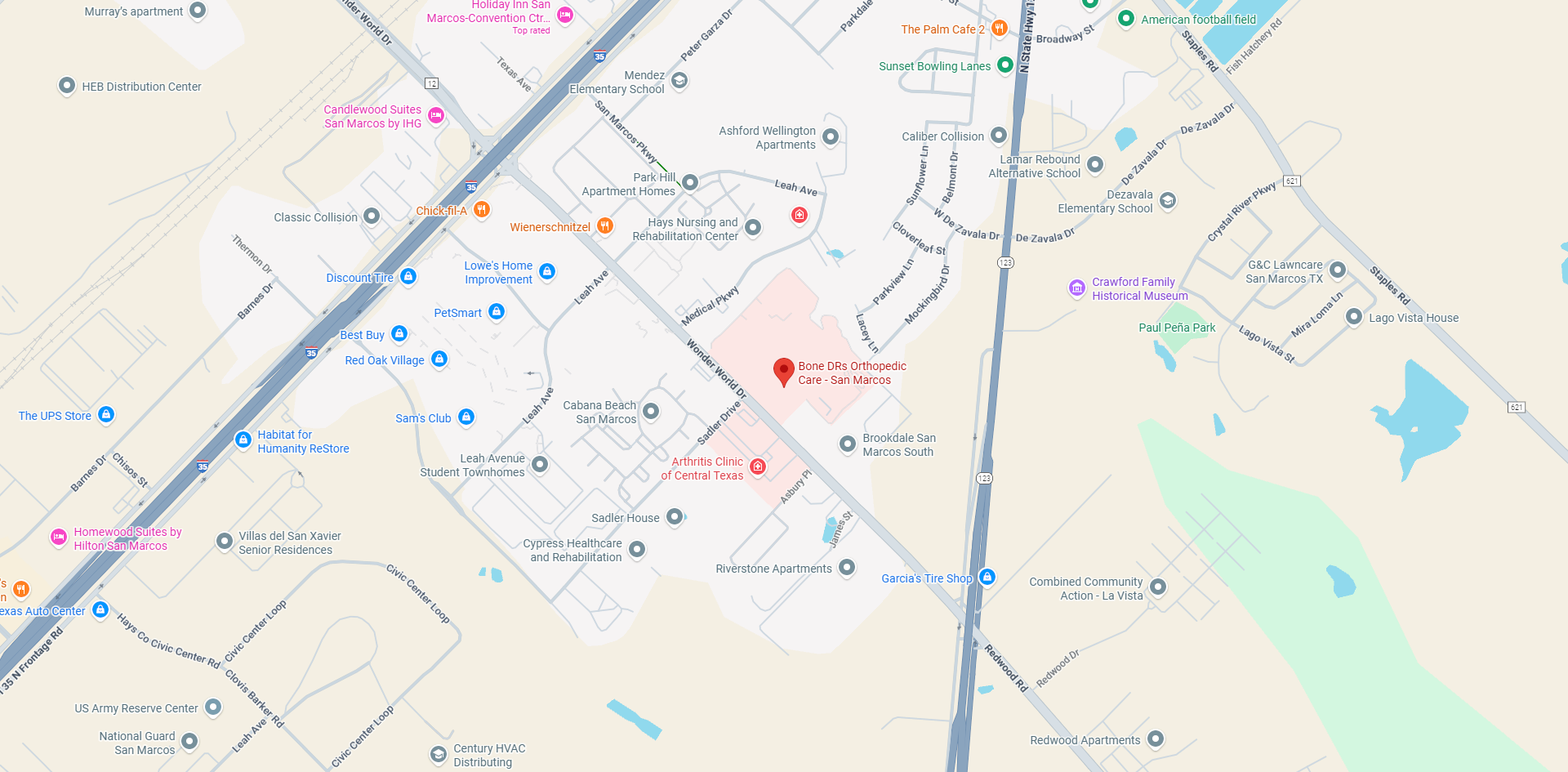
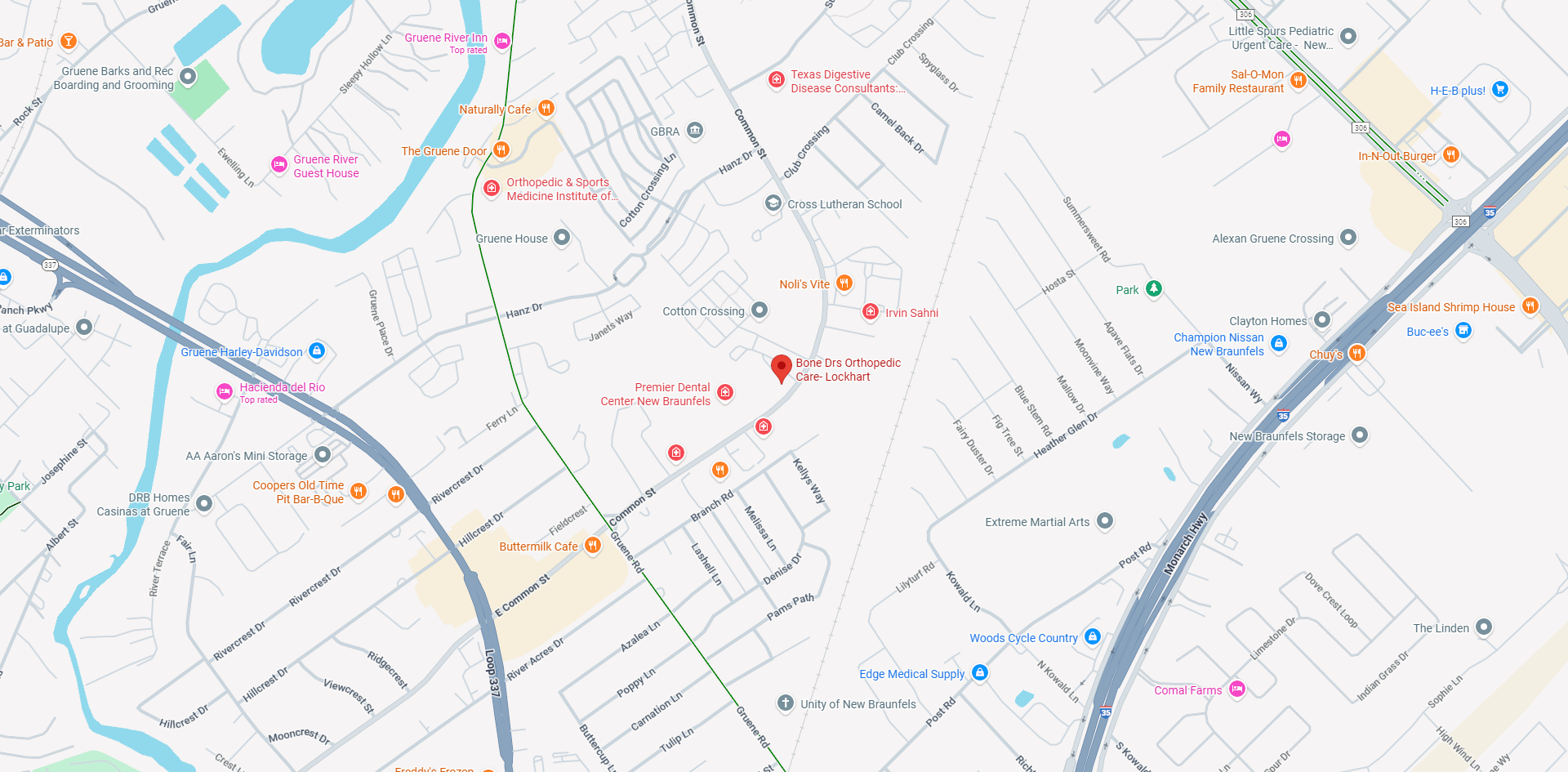
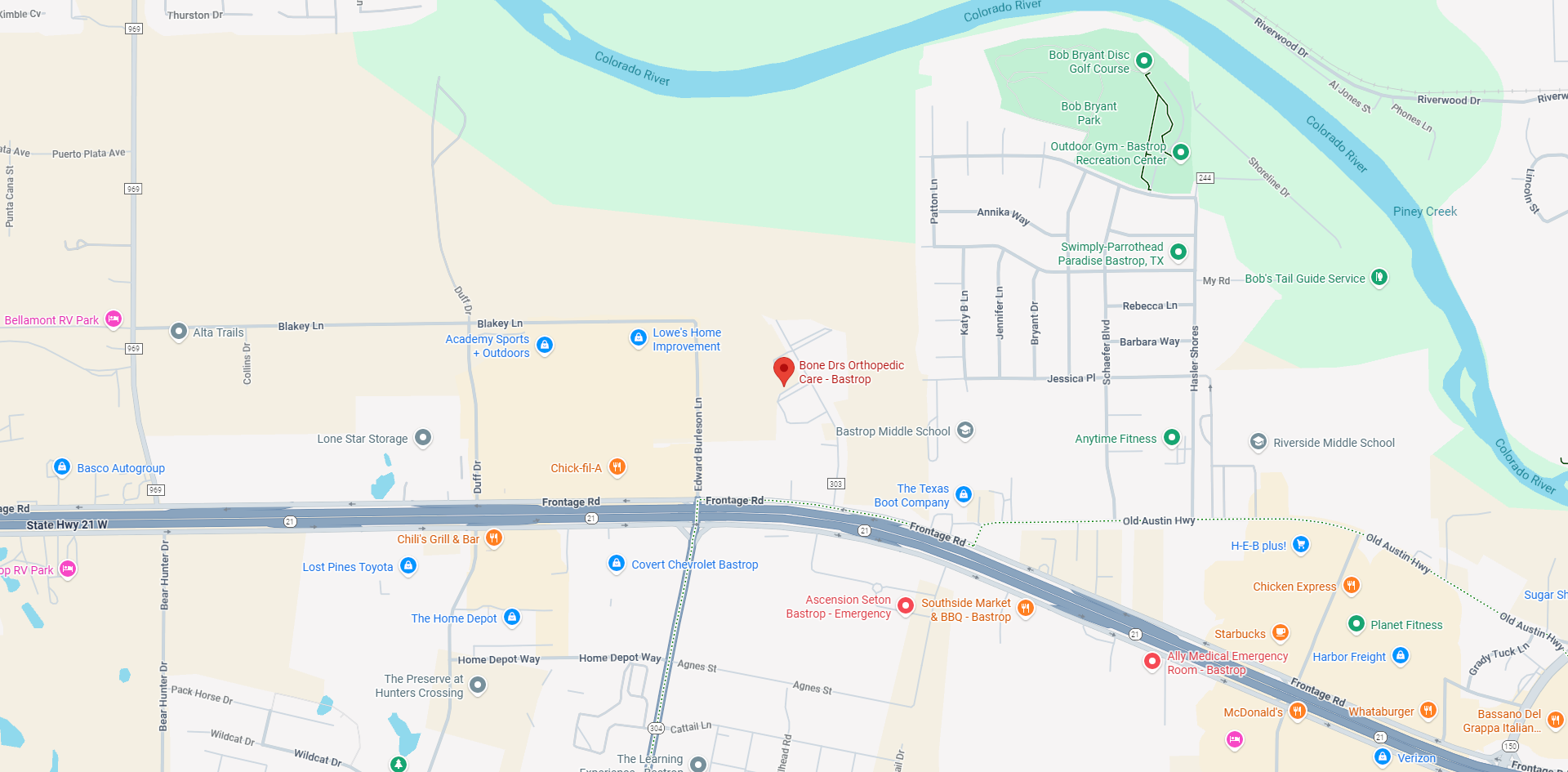
Our shoulder specialists see patients in Austin, San Marcos, Round Rock, and Bastrop, and we offer the full range of treatment under one roof, from injections and therapy through arthroscopic repair and shoulder replacement. Book an appointment online in about a minute, or call 512-266-3377, and let's find out what is actually going on in your shoulder.
If you have any concerns about your joints, contact us and we can help determine a treatment that works for you.