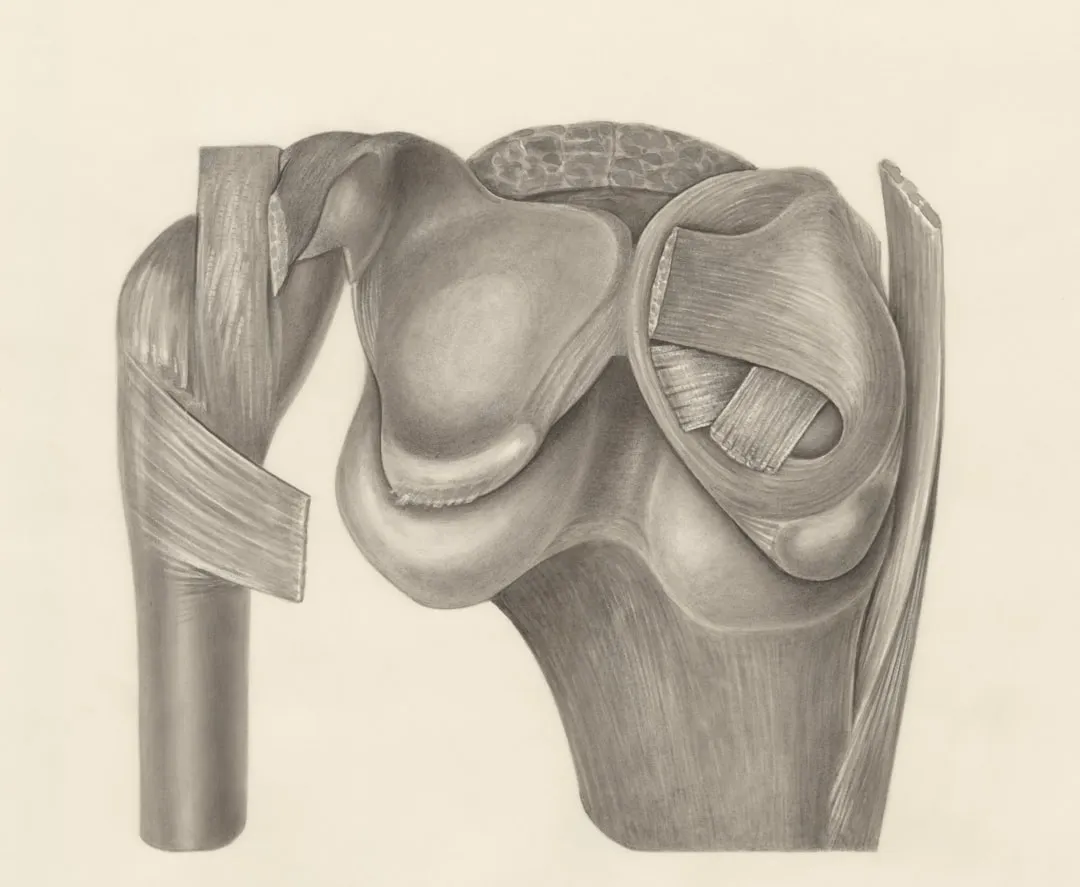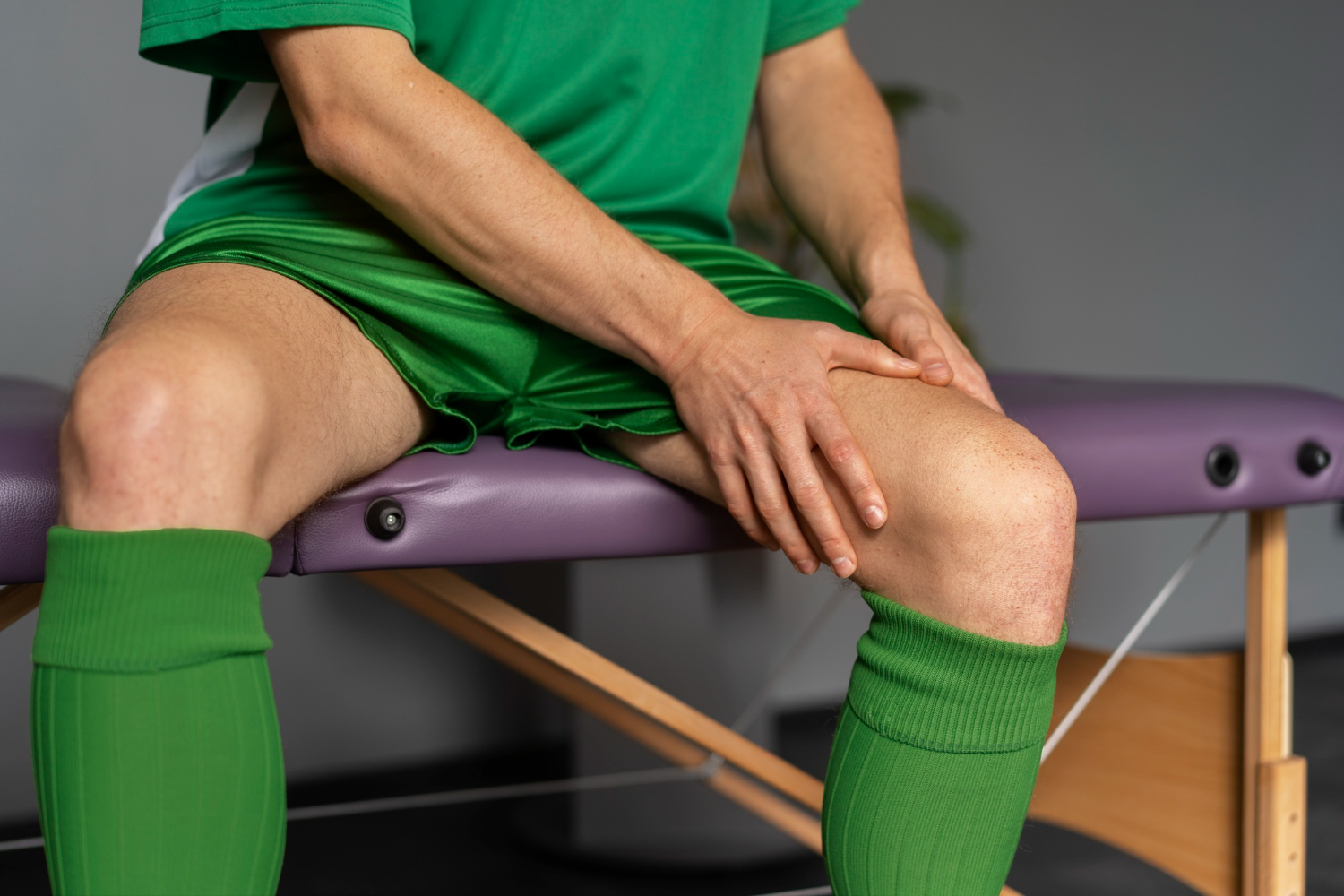
A knee replacement is an operation that removes the worn surfaces of your knee joint and caps them with smooth metal and plastic parts, so the bones stop grinding against each other. If a surgeon has told you your knee is "bone on bone," this is usually the conversation that comes next. The surgery itself is one of the most reliable operations in orthopedics. The part most people underestimate is the recovery: the first six weeks take real work, and how you prepare beforehand shapes how you feel a year later.
This guide walks through how surgeons decide a knee is ready, what the operation involves, and what daily life actually looks like afterward: sleeping, driving, going back to work, and which activities come back. It also covers the mental side, because the research is clear that what you expect going in strongly predicts how happy you are coming out.
Quick facts about knee replacement
- How long it lasts: About 93 out of 100 total knee replacements are still working at 15 years, and about 82 out of 100 at 25 years.
- Hospital stay: Many patients go home the same day or after one night.
- Walking: You stand and walk with help the day of surgery. Most people move from a walker to a cane within 1 to 3 weeks.
- Driving: Plan on roughly 2 to 4 weeks after a left knee if you drive an automatic, and about 4 to 6 weeks after a right knee.
- Back to work: Desk jobs often return in 2 to 6 weeks. Jobs on your feet usually take 6 to 12 weeks. Heavy labor can take 3 months or more.
- Full recovery: Most people feel close to normal by 3 months, with strength and swelling continuing to improve for up to a year.
Christopher Jimenez, MD, is the founder of BoneDrs and a Board Certified Orthopedic Surgeon specializing in hip and knee replacement. At BoneDrs, knee arthritis care runs from injections and physical therapy to minimally invasive and partial knee replacement, so patients can work through every option with one team.
Understanding knee replacement: why your knee got here
Your knee is where three bones meet: the thighbone, the shinbone and the kneecap. Each end is covered with cartilage, a smooth, slippery layer that lets the joint glide. Osteoarthritis is what happens when that cartilage wears thin and cracks. Once it is gone, bone rubs on bone. That is the source of the deep ache, the stiffness in the morning, and the grinding feeling when you climb stairs.
What causes it
Most knees that need replacing have osteoarthritis from years of normal use, often made worse by family history, extra body weight, or an old injury such as a torn ACL or meniscus. Rheumatoid arthritis and other inflammatory conditions can damage the joint too. Cartilage does not grow back, which is why arthritis gets gradually worse rather than better.
Signs your knee may be ready for surgery
- Pain that wakes you at night or hurts while you are resting, not just when you move
- Stairs, getting out of a low chair, or walking a few blocks have become hard
- The knee is bowing in or out, or will not fully straighten
- Injections give you weeks of relief instead of months, or stop working at all
- You have been through physical therapy, weight changes and medication, and you are still limited
How surgeons decide if you need one
- Your story first. Your surgeon asks how far you can walk, how you sleep, and what activities you have given up. This matters more than any image.
- A hands-on exam. They check how far the knee bends and straightens, whether it is stable, and whether the pain might really be coming from your hip or back.
- Standing X-rays. These show how much joint space is left between the bones. When the space has collapsed, patients are often told the knee is bone on bone.
- What you have already tried. Most insurers and most surgeons want to see that non-surgical treatment has been given a fair chance.
- Your overall health. Blood sugar control, smoking, weight, heart health and dental infections all affect infection risk and healing, so some patients are asked to work on these first.
Total, partial, or not yet: your options side by side
| Total knee replacement | Partial knee replacement | Non-surgical care | |
|---|---|---|---|
| What is done | All surfaces of the knee are resurfaced | Only the one worn section is resurfaced | Injections, physical therapy, bracing, weight and activity changes |
| Who it suits | Arthritis across the whole knee | Arthritis limited to one side, with healthy ligaments | Earlier arthritis, or anyone not ready for surgery |
| Driving | About 4 to 6 weeks (sooner for a left knee) | Often about 3 weeks | No restriction |
| Recovery | Most activities by 3 months, full gains by 1 year | Usually faster and less painful early on | None, but relief may fade |
| How long it lasts | About 82 in 100 still working at 25 years | About 70 in 100 still working at 25 years | Varies, often months per injection |
| Kneeling | Many find it uncomfortable | Often easier than after a total | Depends on your arthritis |
Non-surgical management
Most people start here, and for many it can buy them a few years of symptom management. Strengthening the thigh and hip muscles takes load off the joint. Losing even a modest amount of weight reduces the force through the knee with every step. Cortisone injections can calm a flare. Gel injections, also called viscosupplementation, add lubrication to the joint and help some patients for several months. The honest limit is that none of these regrow cartilage. When they stop working, it is usually a sign the arthritis has moved past what they can handle. BoneDrs offers all of these through its knee care team, so you can try them without changing practices. If you want to talk through where you are, you can book an appointment online.
What the surgery involves
The operation usually takes one to two hours under a spinal or general anesthetic. Your surgeon removes a thin layer of damaged bone and cartilage from the ends of the thighbone and shinbone, fits metal caps in their place, and places a smooth plastic spacer between them so the joint glides. Minimally invasive techniques use a smaller incision and try to spare the large thigh muscle, which can make the first few weeks easier for the right patient. You can read more about minimally invasive knee replacement and partial (unicondylar) knee replacement at BoneDrs.
Preparing for surgery, including the mental side
This is the part most people skip, and it is the part that matters most. In a study of more than 1,700 knee replacements, patients whose expectations were not met were nearly 11 times more likely to be unhappy with their result than patients whose expectations were met. That was a bigger factor than pain before surgery or even a complication.
Set honest expectations
About 4 out of 5 people are clearly satisfied with their new knee. The rest usually have some lingering stiffness, ache, or swelling. Your knee will feel better than your arthritic knee, but it will not feel like the knee you had at 25. It may click, feel warm for months, and never like being knelt on. Knowing that ahead of time is what lets most people call the surgery a success.
If you are scared
That is normal, and it is worth saying out loud at your pre-op visit. Ask your surgeon to walk you through the first three days in detail: when you will stand, how pain is controlled, and when you go home. Fear usually shrinks once the unknowns have names. Some patients find it helps to talk to someone who has had the surgery.
Get your body and your house ready
- Do your homework exercises. Patients who strengthen their thigh muscles before surgery tend to get moving faster afterward.
- Prepare one floor. If you can, set up a bed, bathroom and recliner on the same level for the first two weeks.
- Clear the floor. Remove throw rugs and cords, and add a night light on the way to the bathroom.
- Line up help. Plan for someone to drive you and help around the house for at least the first week.
- Raise your seats. A raised toilet seat and a firm chair with arms make standing up much easier.
What life is actually like afterward
Sleeping
Poor sleep is one of the most common complaints in the first four to six weeks, and it surprises people. The knee aches at night, it is hard to find a comfortable position, and pain medicine can disrupt sleep. Most people sleep on their back with the leg straight. Do not sleep with a pillow under the knee, because it lets the joint stiffen in a bent position. Many patients find side sleeping comfortable after a couple of weeks with a pillow between the knees. Sleep usually improves noticeably by six to eight weeks.
Driving
You cannot drive while taking narcotic pain medicine, and you need enough strength and reaction speed to slam on the brake. Because your right foot works the pedals, a left knee replacement in an automatic car often means driving again in about 2 to 4 weeks. After a right knee, plan on roughly 4 to 6 weeks, and some surgeons advise waiting the full six. A manual transmission takes longer. A good test is a short drive in an empty parking lot with someone beside you before you head into traffic.
Going back to work
- Desk work: Often 2 to 6 weeks, especially if you can keep your leg up and get up to walk every hour.
- On your feet all day (retail, teaching, nursing): usually 6 to 12 weeks.
- Heavy labor, climbing, or kneeling (construction, plumbing, warehouse work): often 3 months or more, and some jobs need permanent adjustments.
Kneeling, stairs and what may never feel the same
Kneeling does not damage a knee replacement, but many people find it uncomfortable for good, often because the skin over the scar stays numb or sensitive. Plan on a kneeling pad for gardening. Stairs get much easier than they were with arthritis, though going down may feel less confident for a few months. Most people regain enough bend to climb stairs, get in and out of a car, and ride a bike, but deep squatting usually does not come back. Some clicking or a faint clunk with movement is normal from the knee replacement parts touching.
What you can still do
Walking, hiking on good trails, golf, cycling, swimming, dancing and doubles tennis are all generally encouraged once you are cleared. Most surgeons ask you to avoid running, jumping and high-impact sports, because they wear the plastic spacer faster. Lifting grandchildren, gardening and travel are all realistic goals. Tell airport security you have a joint replacement, since the metal may set off detectors.
Myths that keep people waiting too long
"Wait as long as you possibly can." Waiting used to be standard because implants did not last. That has changed. When researchers pooled registry data on nearly 300,000 knee replacements from six countries, about 82 out of 100 total knees were still working 25 years later. Waiting until you can barely walk also means weaker muscles going in and a harder recovery coming out.
"I'm too young." Age alone is not the deciding factor. What matters is how much the knee limits your life and whether other treatments still help. Younger, active patients do have a higher chance of needing a second surgery someday, which is worth a direct conversation with your surgeon.
"The surgery is the hard part." The operation takes a couple of hours. The physical therapy that follows takes weeks, and it is what decides how well your knee bends. Patients who keep up with their exercises at home, especially in the first six weeks, tend to get the best results.
Recovery, week by week
- Day of surgery to day 3: You stand and walk with a walker, often within hours. The goal is getting the knee fully straight, controlling swelling with ice and elevation, and going home safely.
- Weeks 1 to 2: Walker or crutches, physical therapy two to three times a week, and home exercises several times a day. Swelling and bruising are at their worst. Aim for the knee to bend to about 90 degrees.
- Weeks 3 to 6: Most people switch to a cane, then walk without one. Pain medicine tapers off. Driving and desk work often return in this window.
- Weeks 6 to 12: Strength and stamina build. Longer walks, stationary cycling and light household work become comfortable. Most people return to on-their-feet jobs near the end of this phase.
- Months 3 to 12: Swelling and warmth keep fading. Strength and endurance continue to improve, and many people say the knee finally feels like theirs at around the one-year mark.
Frequently asked questions
How bad does a knee have to be before replacement?
There is no single X-ray cutoff. Replacement makes sense when arthritis limits your daily life and treatments like injections and therapy no longer give lasting relief. Most patients are between 50 and 80, but your pain and function matter more than your age.
How do I prepare for knee replacement surgery mentally?
Learn exactly what the first six weeks will involve and set realistic goals. Patients whose expectations are not met are about 11 times more likely to be unhappy with the result, so ask your surgeon what your knee will and will not do afterward.
How long does a knee replacement last?
Large registry studies show about 93 out of 100 total knee replacements still working at 15 years and about 82 out of 100 at 25 years. Partial knee replacements last a little less, about 70 out of 100 at 25 years.
When can I drive after knee replacement?
Usually 2 to 4 weeks after a left knee in an automatic car, and about 4 to 6 weeks after a right knee. You must be off narcotic pain medicine and able to brake hard.
Can I kneel after a knee replacement?
Kneeling will not harm the implant, but many people find it uncomfortable long term. A cushioned kneeling pad helps, and comfort often improves over the first year.
Is knee replacement worth it?
For most people with advanced arthritis, yes. About 4 out of 5 patients are clearly satisfied, and most report less pain and better walking within 3 months. The best results come from good preparation and steady work in physical therapy.
Schedule a consultation at BoneDrs
If your knee is deciding how far you walk, how well you sleep, or what you say no to, it is worth finding out where you stand. The BoneDrs team sees knee arthritis patients in Austin, San Marcos and Bastrop, and patients from Round Rock and the surrounding area are welcome at the Austin office. We offer every step under one roof, from injections and therapy to partial and total knee replacement, so you can start with the least invasive option and know a surgeon is there when you need one. Book an appointment online or call 512-266-3377.
Sources
- Evans JT, et al. How long does a knee replacement last? A systematic review and meta-analysis. The Lancet, 2019. doi:10.1016/S0140-6736(18)32531-5
- Bourne RB, et al. Patient satisfaction after total knee arthroplasty: who is satisfied and who is not? Clinical Orthopaedics and Related Research, 2010. doi:10.1007/s11999-009-1119-9
- American Academy of Orthopaedic Surgeons, OrthoInfo. Activities After Total Knee Replacement
- NHS. Knee replacement recovery
If you have any concerns about your joints, contact us and we can help determine a treatment that works for you.